How to Improve Your Learning Skills
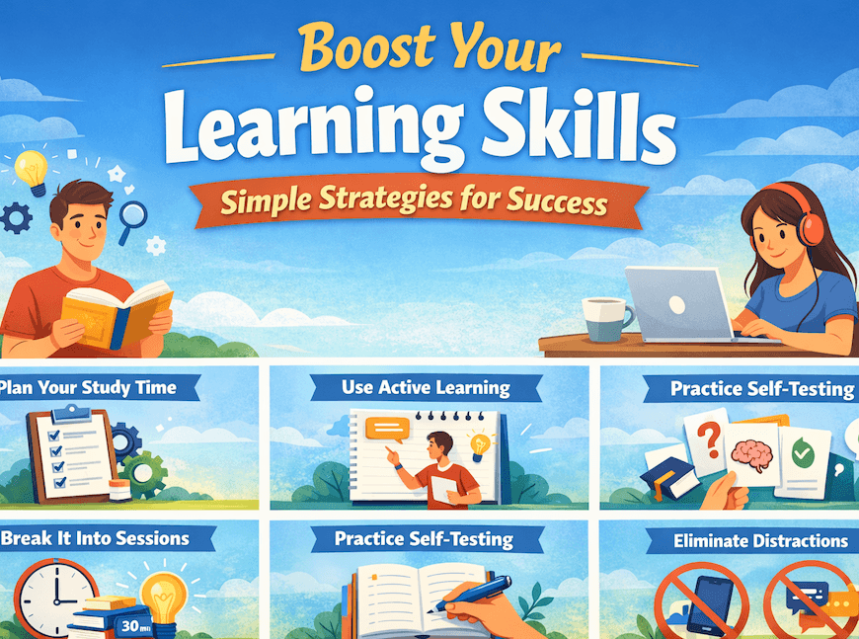
Improving your learning skills isn’t about being “naturally smart.”
It’s about how you approach learning.
The way you study, think, and practice matters more than how long you sit with a book.
And once you fix that… everything gets easier.
Start With a Clear Plan
Learning without a plan feels messy.
You read things. Forget things. Repeat.
Instead, create structure:
- What are you learning?
- When will you study?
- What’s your goal for each session?
A structured plan helps you avoid last-minute cramming and improves focus.

Use Active Learning (Not Passive Reading)
This is where most people go wrong.
Reading alone isn’t enough.
You need to engage with the material:
- Summarise in your own words
- Teach someone else
- Ask questions
Active learning improves understanding and retention much more than passive study.
Break Study Time Into Smaller Sessions
Long study sessions feel productive.
They’re not.
Research shows spacing your study time helps you remember more than long, continuous sessions.
Try:
- 25–50 minutes focused work
- Short breaks in between
It keeps your brain fresh and focused.
Practice Self-Testing
One of the most effective techniques.
Instead of reviewing notes again and again, test yourself:
- Recall information without looking
- Explain concepts out loud
- Use flashcards
Self-testing gives immediate feedback and strengthens memory.
Improve Your Note-Taking
Good notes are not copied notes.
They’re processed notes.
Try this:
- Write key ideas, not everything
- Rewrite notes in your own words
- Review them the same day
Organised notes make studying easier later.
Eliminate Multitasking
Multitasking feels efficient.
It’s not.
It reduces focus and weakens learning.
Studies show that what you think about while studying matters more than how long you study — and distractions hurt that focus.
So:
- One task at a time
- Fewer distractions
- Full attention
Mix Up How You Learn
Don’t rely on one method.
Switch things up:
- Read
- Watch
- Practice
- Discuss
Changing your learning style and environment can improve retention and understanding.
Take Care of Your Brain
This part gets ignored.
But it matters.
Sleep, breaks, and health affect learning more than people think.
- Sleep helps memory consolidation
- Breaks improve focus and retention
If your brain is tired, learning slows down.
Stay Consistent, Not Perfect
You don’t need perfect study days.
You need consistent ones.
Even small daily progress builds strong learning skills over time.
Because learning is not about intensity.
It’s about repetition.
Bring It All Together
Improving your learning skills comes down to a few key habits:
- Plan your study time
- Stay active while learning
- Practice recall
- Stay consistent
- Take care of your energy
If you’re also preparing for travel or studying abroad, it’s worth planning your essentials ahead. For example, you can learn more about travel cash Brighton here to stay organised and focused on your learning goals.
Final Thought
You don’t need to study harder.
You need to study better.
Because once you understand how to learn…
Everything else becomes easier.