The Difference Between Learning English and Actually Using It
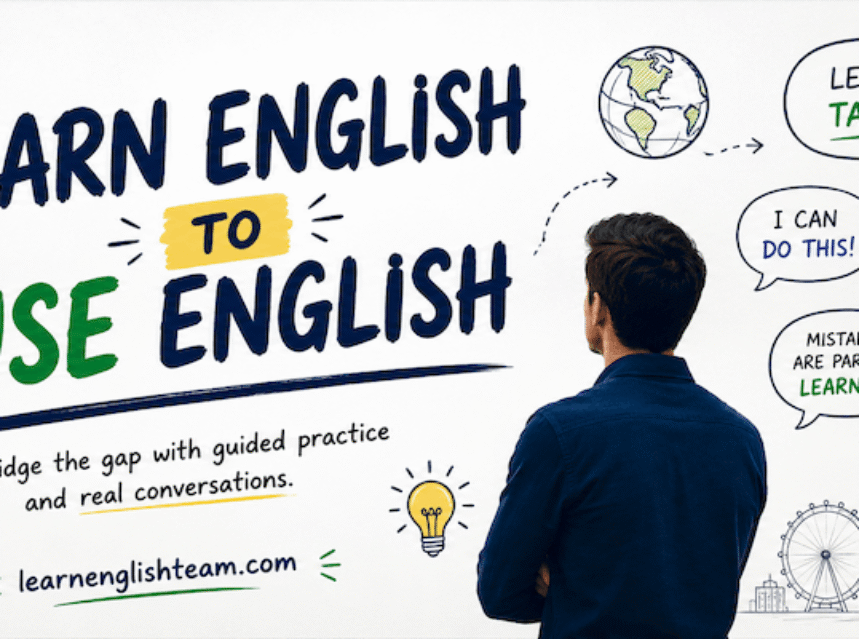
Millions of people study English for years. They memorise verb tables, ace grammar quizzes, and collect vocabulary like stamps. Then a native speaker asks them a simple question, and their mind goes blank.
This freeze is more common than most learners realise. Around 1.53 billion people speak English across the globe, yet the vast majority of non-native speakers plateau at passive knowledge. They can read an article, tick the right box on a test, but struggle to string together a confident sentence in real time.
Bridging that gap demands a shift from passive study to active, guided practice. Working with a dedicated teacher remains the most effective way to make that shift stick. Here’s why the gap exists, how a teacher helps close it, and what practical strategies can accelerate your progress in 2026.

Why is there a gap between learning English and actually using it?
Traditional English education trains learners to pass exams, not to communicate. Grammar drills, rote memorisation, and scripted textbook dialogues build passive knowledge rather than active fluency. The result? Learners who can dissect a sentence on paper but cannot produce one under pressure.
Most people can read decent English and survive a multiple-choice quiz. But the moment a native speaker opens their mouth (at full speed, with slang, with an accent), something short-circuits. This is a practice gap, not a knowledge gap. Your brain holds the information; your mouth simply never trained to deliver it.
Apps like Duolingo, Babbel, and Memrise reinforce this pattern. They revolve around silent input: tapping, swiping, reading. You rarely produce a full spoken sentence, let alone improvise one. After months of daily streaks, you might recognise hundreds of words yet still hesitate to order coffee in London.
Fear plays a massive role too. Traditional classrooms penalise mistakes with red ink and low marks, so learners develop a reflex: stay quiet, avoid risks, stick to safe phrases. That anxiety follows them into real-world conversations and kills spontaneity.
Employers see the consequences. Graduates arrive with strong academic foundations but lack the spoken proficiency to negotiate, present, or collaborate in English. The gap between classroom English and workplace English keeps widening.
How can a teacher help you improve your English in ways self-study cannot?
A human teacher offers something no app can replicate: real-time, culturally aware correction. Improve your English with a teacher who adjusts their style mid-conversation, picks up on your confusion before you even voice it, and responds with the unpredictability of genuine dialogue.
Personalised feedback makes a decisive difference. A teacher spots your specific pronunciation habits, identifies recurring grammar errors, and designs targeted exercises around your weak points. An app gives everyone the same lesson. A teacher gives you yours.
Accountability matters just as much. Left alone, most learners skip practice when life gets busy. A teacher sets a schedule, tracks your progress week by week, and keeps you honest about the work you’re putting in. That structure turns good intentions into consistent habits.
The confidence factor deserves attention too. A supportive teacher creates a space where mistakes become learning tools, not embarrassments. You try a complex sentence, stumble, and your teacher helps you rebuild it. Over time, that safe environment rewires your emotional response to speaking English.
What about AI conversation tools? They serve a purpose for low-pressure reps and daily drills. But after eight to twelve weeks, most learners hit a ceiling. AI cannot match the unpredictable flow of real human conversation, catch subtle cultural missteps, or sense when you need encouragement rather than correction.
What should you look for when choosing an English teacher?
Finding the right teacher can feel overwhelming, given the sheer number of options available online and in person. Two areas deserve careful evaluation before you commit.
Qualifications and teaching experience
Look for recognised certifications first. CELTA, TEFL, and TESOL remain the gold standard for English language teaching. These qualifications signal that a teacher understands pedagogical methods, not just the language itself.
Years of experience matter, but relevance matters more. A teacher who has spent a decade preparing students for IELTS may not suit someone who needs business communication skills. Ask whether they’ve worked with learners at your level and with your specific goals.
Specialisms can accelerate your progress dramatically. Some teachers focus on pronunciation coaching, others on professional writing or exam strategies. Match your goal to their expertise.
Teaching approach and personalisation
Favour teachers who adopt a conversational, person-centred approach. Rigid textbook methods recreate the same classroom dynamic that caused the gap in the first place.
The best teachers start by analysing your current level, then identify gaps in vocabulary, grammar, and pronunciation. From there, they build a bespoke programme tailored to your needs. Ask upfront whether they provide regular feedback, set homework, and run progress assessments.
Should you choose a native or non-native speaker? Both bring distinct advantages. Native speakers offer authentic pronunciation and cultural nuance. Non-native teachers often understand your struggles from personal experience and can explain tricky grammar points through the lens of your first language.
Five practical strategies to bridge the gap between learning and using English
Combining teacher-led sessions with smart independent practice creates a powerful engine for real-world fluency. These five strategies work together, not in isolation.
Speak out loud every day, not just in your head
Your mouth and tongue need physical training, just like any muscle. Even five minutes of spoken practice three times a day rewires the connection between your brain and your speech.
Record yourself regularly. Send short voice clips to your teacher for feedback on pronunciation and rhythm. You’ll notice patterns you’d never catch on your own.
No conversation partner? Speak alone. Narrate your morning routine, describe objects in your room, or rehearse your self-introduction. It feels odd at first. It works.
Train with the language rather than just studying it
You don’t learn swimming by reading a textbook about strokes. You get in the water. English works the same way.
Consume English actively through podcasts, news articles, and social media, but always interact with what you absorb:
- Summarise a podcast episode in your own words
- Write a short reaction to a news story
- Discuss a social media post with your teacher during your next session
Set weekly real-world tasks with your teacher. Write a professional email. Prepare a two-minute presentation. Role-play a job interview. These exercises force you to produce language under conditions that mirror actual use.
Use technology as a supplement, not a replacement
AI apps and language tools earn their place in your routine. They build habits, drill pronunciation, and offer low-pressure practice reps whenever you have a spare moment.
But technology alone does not create fluency. It supports the deeper work you do with a real teacher. Think of apps as your daily warm-up and teacher sessions as match day.
A practical combination looks like this:
| Component | Frequency | Purpose |
| AI conversation app | Daily, 10–15 minutes | Vocabulary drills, pronunciation reps |
| Podcast or news listening | Daily, 15–20 minutes | Input exposure, comprehension |
| One-on-one teacher session | 2–3 times per week | Correction, accountability, fluency building |
| Speaking aloud (solo) | 3 times daily, 5 minutes | Muscle memory, confidence |
How to structure your learning schedule to improve your English with a teacher
A solid weekly routine balances teacher-led lessons with self-study and real-world practice. Without that balance, progress stalls.
Aim for two to three teacher sessions per week, each lasting thirty to sixty minutes. Supplement these with daily independent practice: listening to English content, reading for pleasure, and speaking aloud. The combination of guided correction and autonomous exposure creates momentum that neither element achieves alone.
Share your self-study schedule with your teacher. When they know what you’re doing between sessions, they can hold you accountable and adjust your programme based on actual effort, not guesswork. This feedback loop keeps both of you aligned.
Start with a level assessment. Your perceived level and your actual level rarely match. A proper assessment lets your teacher target the right skills from day one, avoiding wasted weeks on material you’ve already mastered.
Set short-term milestones alongside long-term goals. “Hold a ten-minute conversation without reverting to my native language” is a tangible milestone you can hit within weeks. “Pass the C1 exam” is a worthy long-term goal. Both keep you motivated, but the short-term wins fuel daily consistency.

FAQ
How long does it take to improve your English with a teacher?
Progress depends on your starting level, how often you take lessons, and how much you practise between sessions. Most learners notice measurable improvement in speaking confidence within four to eight weeks of regular one-on-one lessons combined with daily practice.
Is it better to learn English with a native or non-native teacher?
Both bring clear advantages. Native speakers provide authentic pronunciation and cultural insight, whilst non-native teachers often understand common learner struggles from personal experience. Choose based on your goals: accent reduction may favour a native speaker, whereas detailed grammar explanations may benefit from a teacher who shares your first language.