IELTS Vocabulary Words List: Meanings, Examples and Free PDF
Learn IELTS vocabulary with short meanings and examples. Choose words that fit your message.
A collocation is a common word combination, such as heavy rain. Learn useful combinations, not just single words.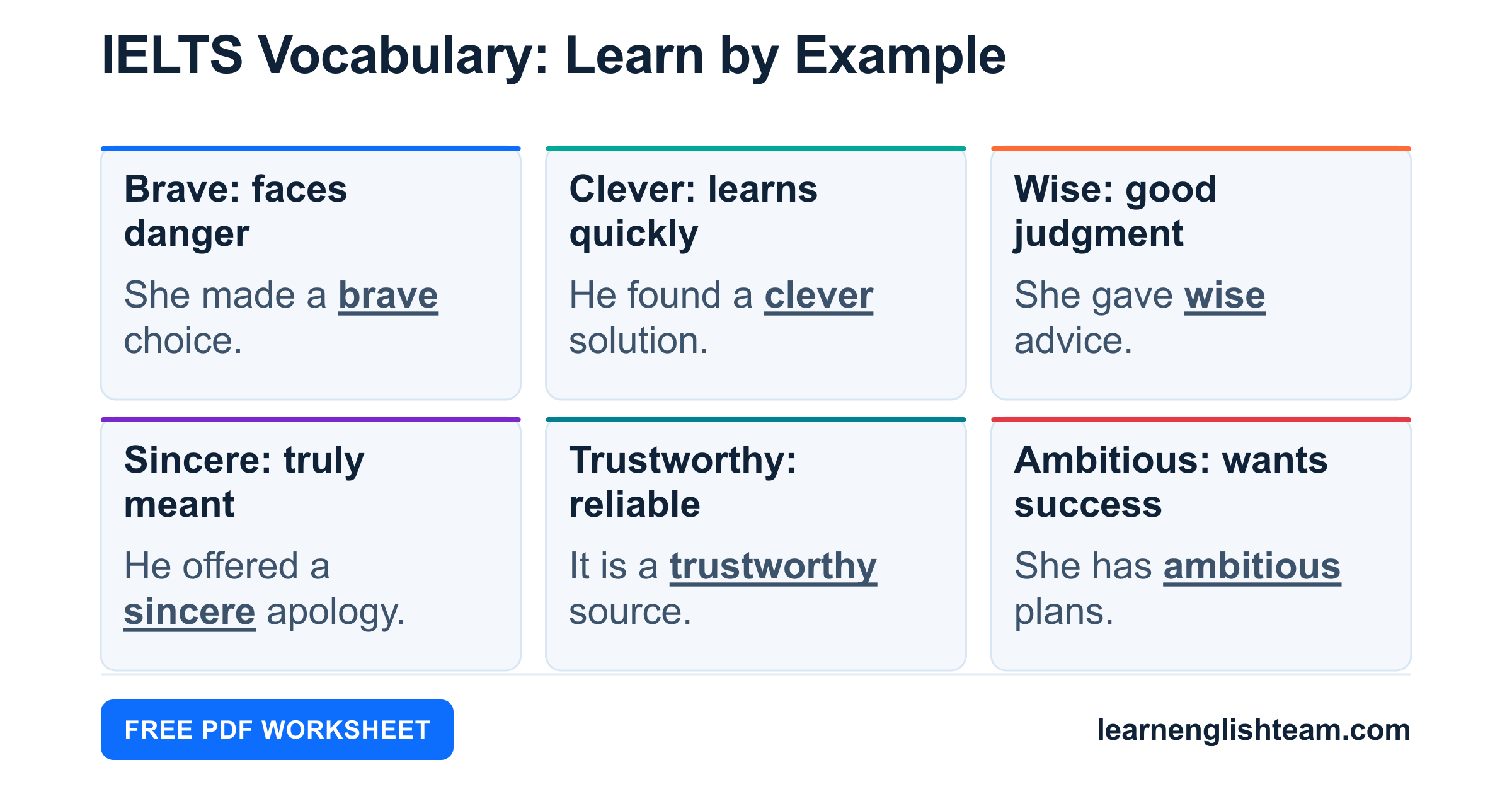
Download the free PDF worksheet
How to Use This IELTS Vocabulary List
Read the meaning and the example together. Similar words are not always interchangeable.
Some words are formal or less common. Use them only when they fit your meaning.
- Spontaneous means unplanned: They gave spontaneous applause.
- Automatic means without conscious thought: Blinking is an automatic reflex.
- Dicey is informal. Risky is neutral.
- Unsustainable means unable to continue at the same level; it is not just a formal word for risky.
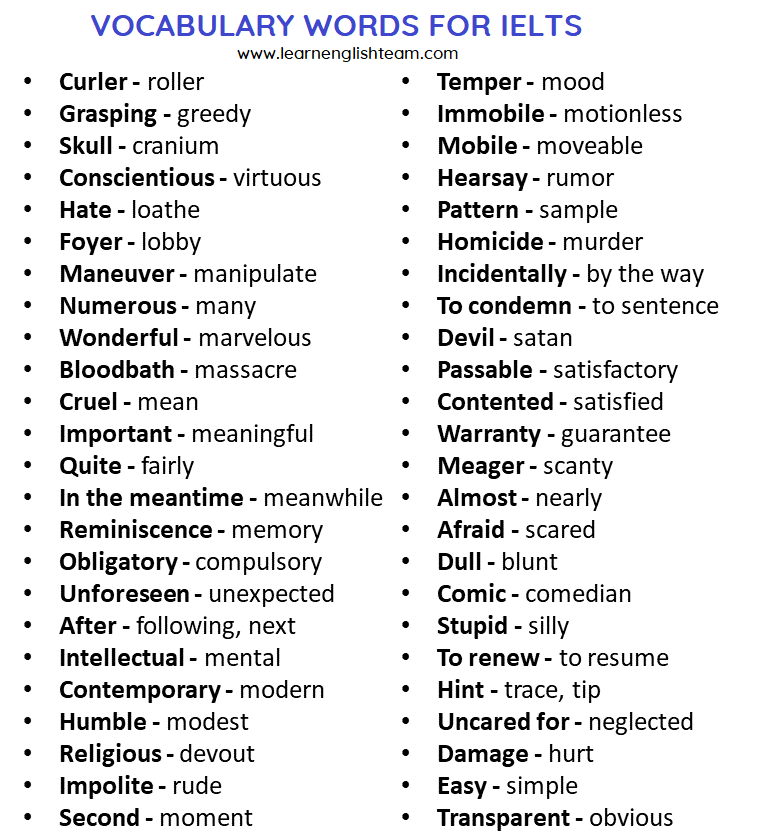
People and Personality (1)
Brave — Willing to face danger or pain. She made a brave choice.
Clever — Quick at learning and understanding. He found a clever solution.
Wise — Showing good judgment from experience. My mentor gave me wise advice.
Trustworthy — Honest and dependable. She is a trustworthy partner.
Beneficent — Generous and doing good (formal). A beneficent donor funded the clinic.
Animated — Lively and full of energy. They had an animated discussion about art.
Sincere — Honest and deeply felt. He offered a sincere apology.
Ambitious — Determined to succeed. She set an ambitious career goal.
Eccentric — Unconventional or slightly strange. The artist had an eccentric style.
Arrogant — Overly proud and unpleasant. His arrogant attitude annoyed his coworkers.
Immodest — Too proud or boastful. Bragging about wealth is immodest.
Impetuous — Acting quickly without thinking. Avoid making an impetuous decision.
People and Personality (2)
Mischievous — Playfully causing trouble. The mischievous child hid the keys.
Naughty — Badly behaved, usually describing children. The naughty puppy chewed my shoe.
Infantile — Childish or immature in adults (disapproving). His infantile behavior ruined the meeting.
Mean — Unkind or spiteful. Do not make mean comments.
Hostile — Unfriendly and aggressive. The crowd became hostile after delays.
Aggressive — Forceful or ready to attack. His aggressive behavior worried us.
Vicious — Cruel and violent. The guard dog launched a vicious attack.
Negligent — Failing to take proper care. A negligent driver caused the crash.
Stupid — Lacking good sense (informal; use unwise in essays). That was an avoidable, stupid mistake.
Handsome — Good-looking, usually describing men. He grew into a handsome young man.
Beautiful — Very attractive or pleasing to see. The park has a beautiful lake.
Emotions and Feelings
A miser avoids spending money. Miser and miserable are not synonyms.
These words express emotions and emotional reactions. Choose words that reflect the exact intensity of the feeling.
Joy — Great happiness or pleasure. The children shouted with joy.
Ecstasy — extreme happiness. Winning brought her ecstasy.
Ardor — strong enthusiasm (formal). She spoke with ardor.
Mirth — laughter and amusement (literary). His joke caused mirth.
Comfort — Relief from distress or physical ease. Good friends provide immense comfort.
Misery — Extreme unhappiness or suffering. Chronic illness caused him deep misery.
Mourn — To feel or express deep grief for a loss. Citizens gathered to mourn the victim.
Remorse — Deep regret for a past mistake. He showed no remorse for his actions.
Morose — unhappy and unfriendly. He looked morose.
Livid — extremely angry. She was livid.
Infuriate — To make someone extremely angry. Constant delays infuriate commuters.
Terror — Extreme fear or panic. She froze in terror at the noise.
Hate — To dislike intensely. I hate driving in heavy traffic.
Jealous — Resentful of someone else’s success or possessions. He felt jealous of his friend’s promotion.
Doubt — Uncertainty about whether something is true. Experts cast doubt on the theory.
Cranky — Easily annoyed or irritable (informal). Tired toddlers often become cranky.
Humiliate — To make someone feel deeply ashamed. Never humiliate a colleague in public.
Crazy — Foolish or wildly irrational (informal; avoid in essays). That sounds like a crazy plan.
Miserable — very unhappy or uncomfortable. I felt miserable.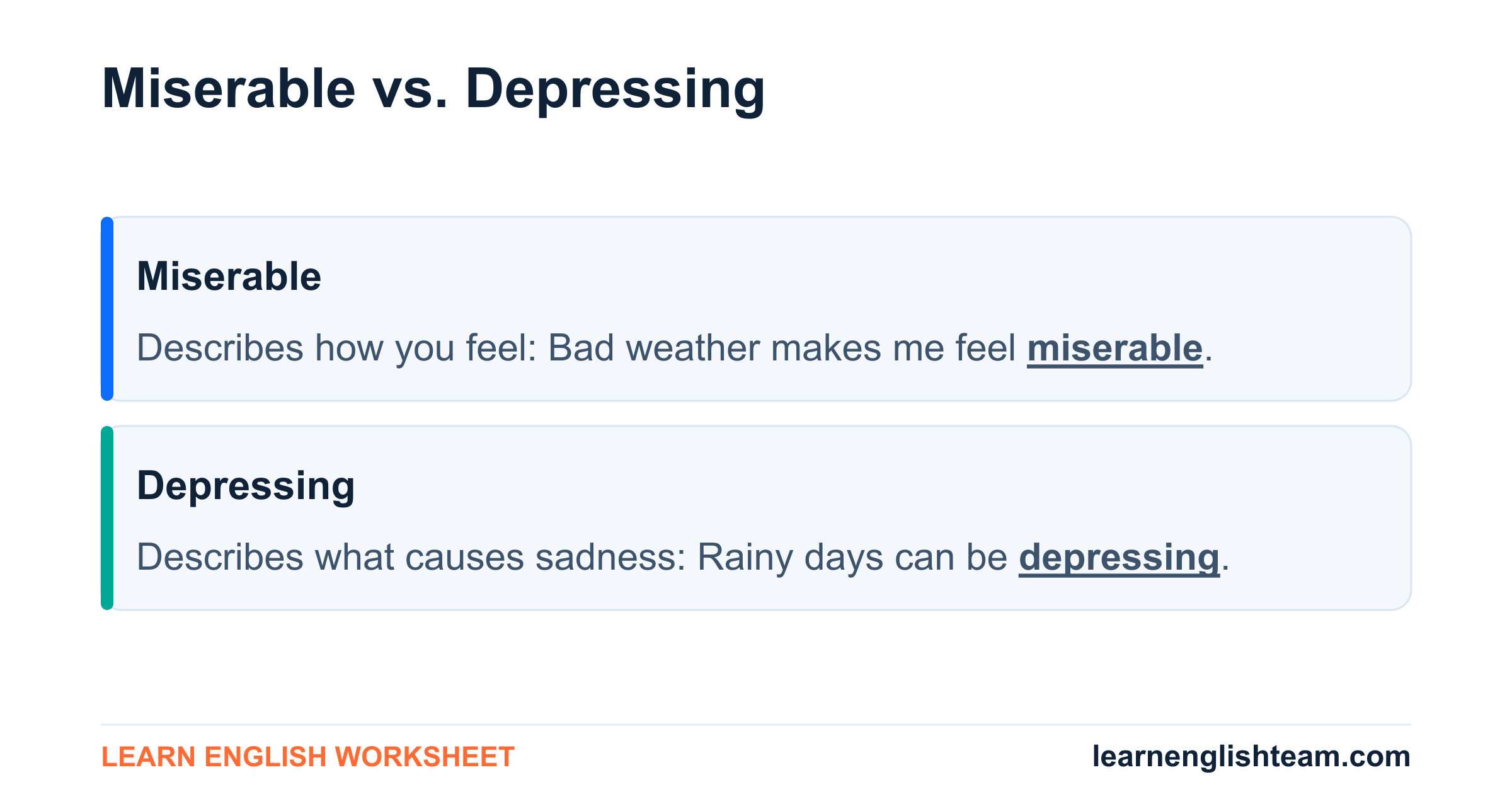
Actions and Verbs (1)
Use these action verbs to describe changes, processes, and formal decisions. Learn each verb with its natural collocation.
To accomplish — To finish a difficult task successfully. She worked hard to accomplish her goals.
To establish — To set up an organization or system. They plan to establish a research center.
To transform — To change something completely. Technology can transform the way we learn.
To elevate — To raise to a higher level. Higher wages will elevate living standards.
To accumulate — To build up gradually over time. Unpaid bills can accumulate very quickly.
To intensify — become stronger or make stronger. The storm intensified.
To diminish — To become smaller or weaker. Fresh water supplies continue to diminish.
To collapse — To fall down or fail suddenly. The old roof collapsed under heavy snow.
To desert — abandon someone or leave a duty. The guard deserted his post.
To disappear — stop being visible or present. The sun disappeared behind clouds.
To withstand — To resist damage from strong forces. Good steel can withstand extreme heat.
To survive — To continue living through difficulty. Small shops struggled to survive the crisis.
To evaluate — To judge the quality or value of something. Teachers will evaluate your final essay carefully.
To differentiate — To recognize the difference between things. It is hard to differentiate between them.
Actions and Verbs (2)
Use conform to, but comply with. The dependent preposition changes with each verb.
To collect — To bring items or data together. Researchers collected data from several local clinics.
To inspect — To examine closely for safety or quality. Engineers will inspect the bridge tomorrow.
To emphasize — To give special importance to an idea. Doctors emphasize the need for regular sleep.
To illuminate — To make a topic clear and easy to understand. Real examples help illuminate this complex topic.
To convey — To communicate a message or feeling. Art can convey deep emotions without words.
To disclose — To make secret or private information public. The bank refused to disclose private records.
To notify — To inform someone officially about something. The school will notify parents by email.
To consult — ask for advice or information. We consulted a teacher.
To respond — To react or reply to something. The team failed to respond in time.
To conform — To follow rules or accepted standards. All products must conform to safety standards.
To admit — To agree that something is true. Leaders should admit their errors quickly.
To behave — To act in a particular way. Children must learn to behave in class.
To explode — To burst outward or increase suddenly. City traffic exploded over the past decade.
To vanquish — To defeat an enemy completely. The champion vanquished her rival in minutes.
Actions and Verbs (3)
To magnify — To make something seem larger or more serious. Media reports often magnify minor risks.
To quake — shake strongly. He quaked with fear.
To disclaim — To deny responsibility formally. The company tried to disclaim all responsibility.
To foretell — predict the future. I cannot foretell the future.
To ignore — To pay no attention to something intentionally. Drivers must not ignore red traffic lights.
To encounter — To meet or experience unexpectedly. Students may encounter unfamiliar questions on tests.
To select — To choose carefully from a group. Please select the best answer from the list.
To vary — To differ in amount, degree, or nature. Rental prices vary by neighborhood and season.
To grab — take hold suddenly (often informal). She grabbed her bag.
To annoy — To make someone slightly angry. Loud ringtones can annoy people in quiet offices.
To hurry — To move or act quickly. We must hurry to catch the last bus.
To visualize — To form a clear mental picture. Athletes often visualize victory before competing.
To administer — manage or officially give something. She administered the test.
To maintain — To keep something in good condition or at the same level. It is vital to maintain high standards.
Academic Verbs and Source References
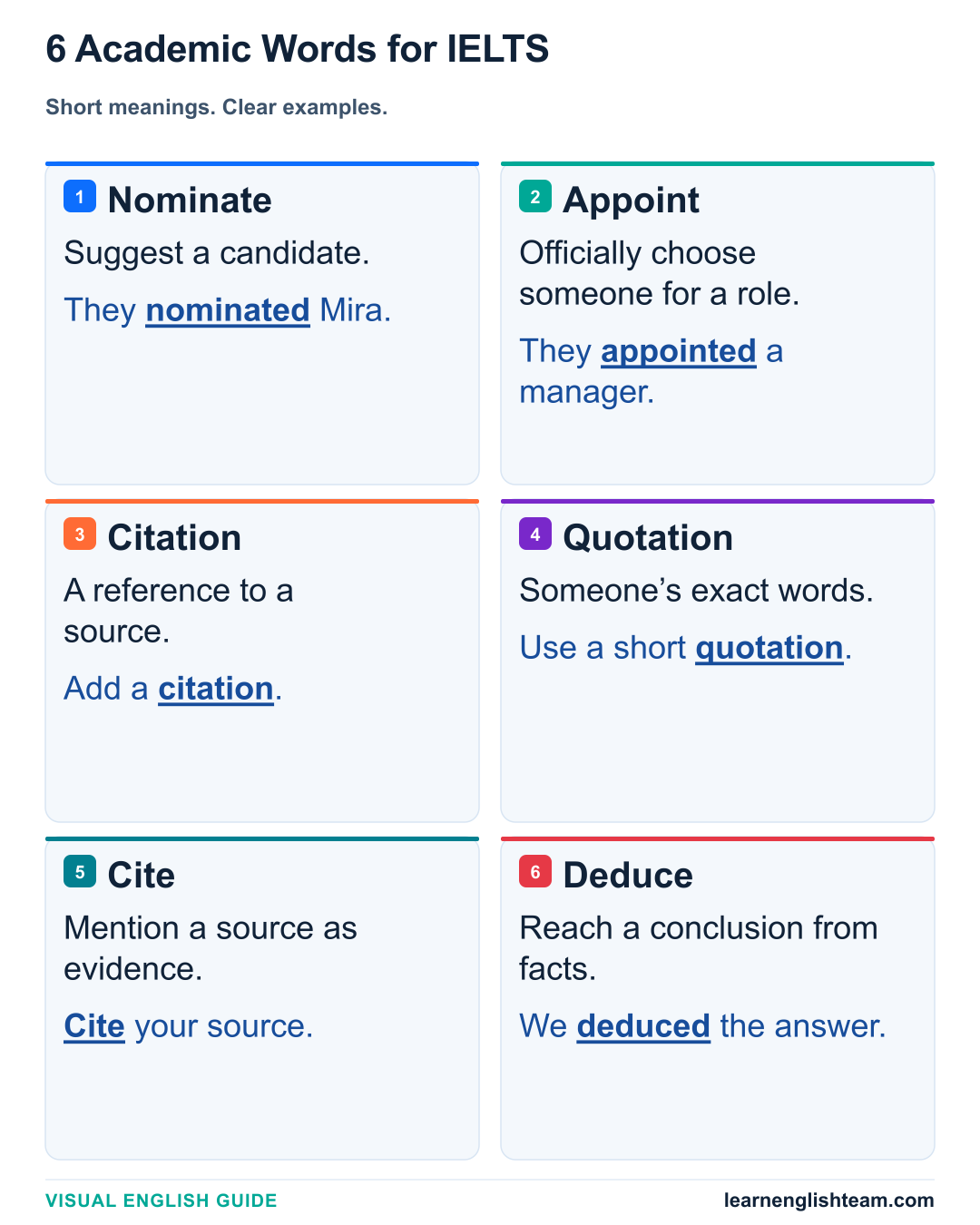
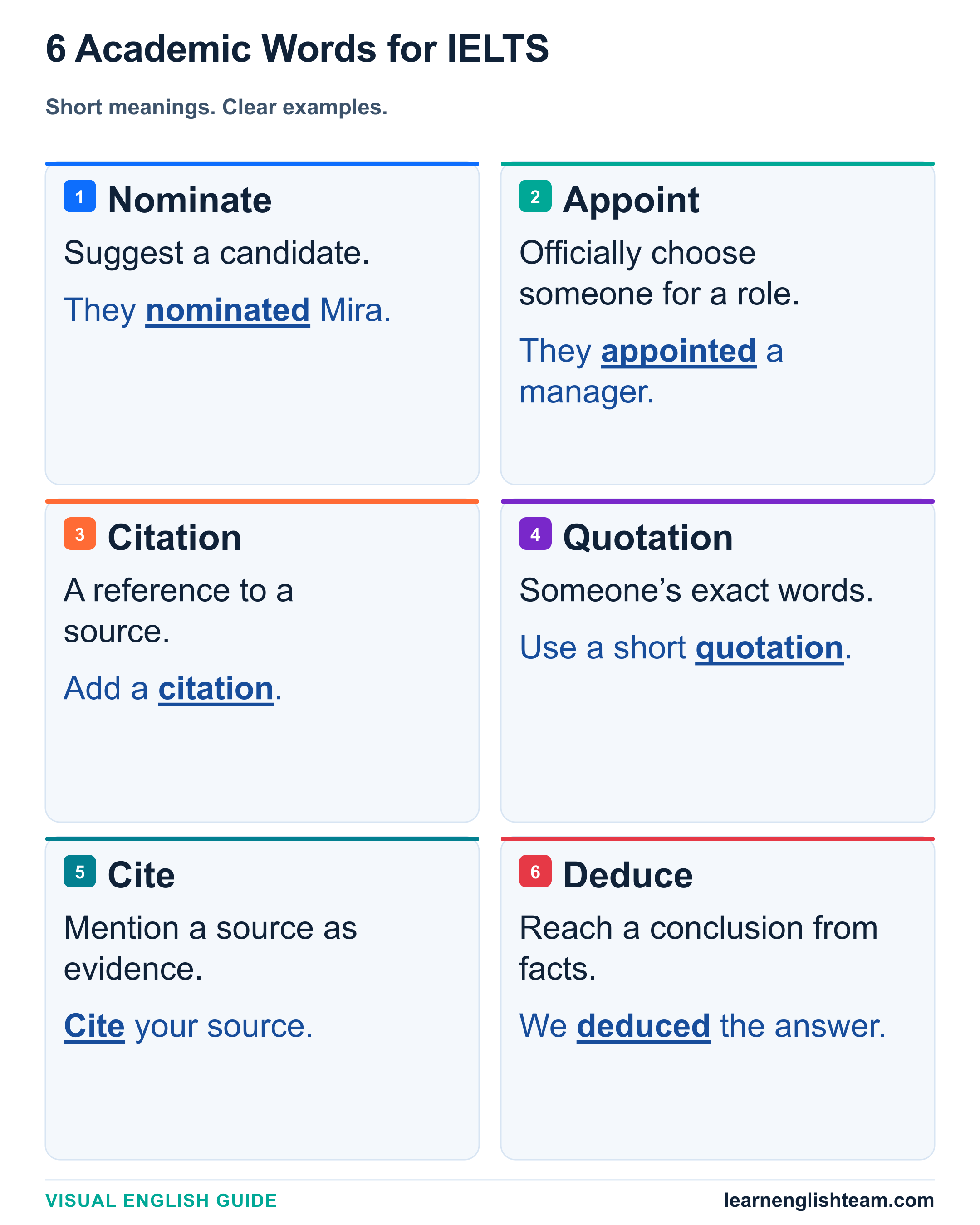
Use nominate to propose a candidate, but appoint to assign a role officially. A citation references an original source, while a quotation repeats exact spoken or written words.
To deduce — To reach a conclusion using logical reasoning. We can deduce the answer from the facts.
To cite — To mention a source or study as evidence. Always cite the original study in your paper.
To renounce — To give up a claim, right, or belief formally. The leader agreed to renounce further violence.
To assure — tell someone confidently to remove doubt. I assured him we were ready.
To impeach — formally accuse a public official of wrongdoing; also challenge credibility (legal). The lawyer impeached the witness’s credibility.
To nominate — To propose someone for an election, job, or award. The committee will nominate two candidates today.
Citation — a reference to a source. Add a citation after the quotation.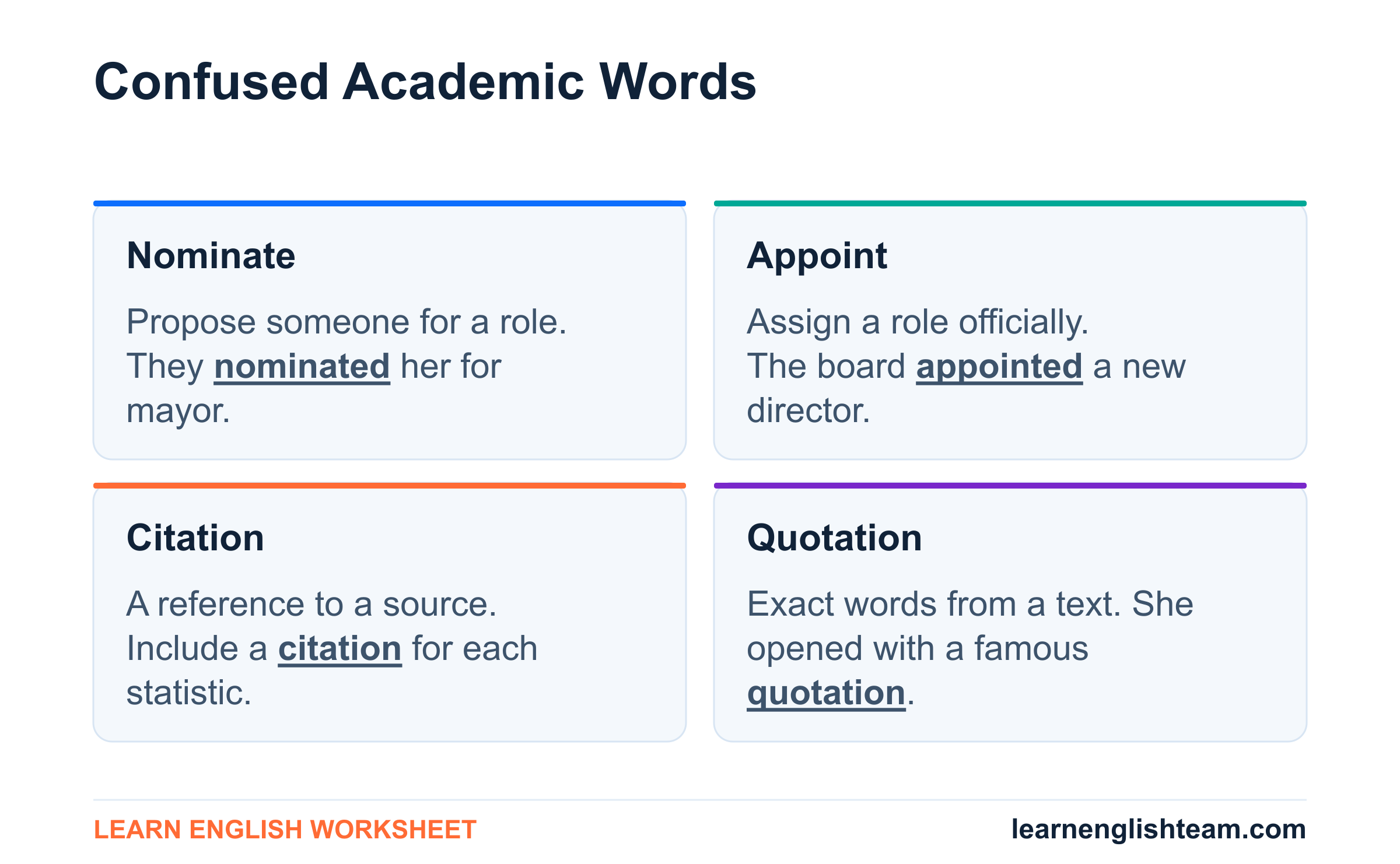
Describing Things, Changes and Situations (1)
These descriptive words show size, quality, and change. Choose each term carefully because near-synonyms carry different formal shades.
Abundant — Existing in large quantities. The region has abundant natural resources.
Vast — Extremely large in area or amount. A vast majority of students agreed.
Enormous — Very large in size or scale. The project required an enormous budget.
Huge — very large. We made a huge mistake.
Vacant — Empty and not occupied. Several vacant seats remained in the hall.
Accurate — Correct and free from error. The lab report provided accurate figures.
Reliable — Consistently dependable. Commuters need fast and reliable buses.
Undeniable — impossible to deny. Her talent is undeniable.
Dubious — Doubtful or untrustworthy. His explanation sounded dubious to everyone.
Identical — Exactly alike in every way. The scientists tested two identical samples.
Vague — Unclear and lacking detail. The instructions were too vague to follow.
Stationary — not moving. The car remained stationary. Stationery means writing materials.
Dormant — Inactive for a period of time. The volcano has been dormant for centuries.
Inflexible — Unwilling to change or bend. Rigid managers follow inflexible workplace rules.
Turbulent — full of irregular movement or trouble. We had a turbulent flight.
Consecutive — Following in unbroken order. The city recorded five consecutive rainy days.
Obsolete — No longer in use due to newer items. Digital tools made that software obsolete.
Lethal — Capable of causing death. High chemical levels proved lethal to fish.
Dangerous — Likely to cause harm. Driving on icy roads is very dangerous.
Describing Things, Changes and Situations (2)
Unlawful — Prohibited by law. Dumping industrial waste remains strictly unlawful.
Defective — Flawed and not working correctly. The store replaced the defective device.
Infrequent — Not occurring often. Bus services are infrequent on weekends.
Spontaneous — natural and unplanned. They gave spontaneous applause.
Dark — Lacking light, or metaphorically gloomy and depressing. War marked a dark chapter in history.
Dry — Lacking moisture or rainfall. Farming is difficult in this dry climate.
Prompt — Done immediately without delay. The customer service team sent a prompt reply.
Aromatic — Having a pleasant and distinctive smell. Fresh herbs create an aromatic soup.
Revolting — Extremely unpleasant and causing disgust. Spoiled meat produces a revolting smell.
Torpid — inactive or slow (formal). He felt torpid after lunch.
Drab — Dull, cheerless, and lacking color. Workers repainted the drab office walls.
Superb — Of outstandingly high quality. The students delivered a superb presentation.
Monotonous — Dull, repetitive, and unchanging. Factory workers disliked the monotonous routine.
Awful — Very bad. Note: Best reserved for informal speaking. The town experienced awful winter weather.
Cozy — warm and comfortable. This room is cozy.
Essential — Absolutely necessary or vital. Clean drinking water is essential for health.
Intriguing — Fascinating and arousing curiosity. The scientist shared an intriguing hypothesis.
Inferior — Lower in quality or standard. Builders avoided using inferior materials.
Academic and Formal Words (1)
Use these academic terms to express complex ideas clearly. Advanced words like virtue work best when used in accurate contexts.
Perception — a way of seeing or understanding something. Public perception has changed.
Understandable — easy to understand; also reasonable. Her anger was understandable.
Indisputable — Impossible to dispute or doubt. Clear evidence made the conclusion indisputable.
Neutral — Impartial and not taking sides. The committee maintained a neutral position.
Interplay — The way two or more things affect each other. Genes and habits show a complex interplay.
Oblique — Indirect rather than clearly stated. The speaker made an oblique comment.
Virtue — A commendable quality or practical advantage. Flexibility is one virtue of online learning.
Appreciable — Large enough to be noticed or measured. The city saw an appreciable drop in pollution.
Impediment — An obstacle that hinders progress. High fees formed an impediment to trade.
Abstract — A paper summary as a noun; theoretical rather than physical as an adjective. Read the abstract before studying abstract concepts.
Constancy — The quality of staying faithful or steady. Success requires constancy of effort.
Momentous — very important. It was a momentous decision.
Substantially — To a great or significant degree. Tuition fees rose substantially this year.
Especially — Particularly, to single out an item. Academic grammar is important, especially in writing.
Completely — Wholly and without omission. Engineers completely redesigned the bridge.
Exactly — Accurately and in precise detail. Follow the laboratory instructions exactly as written.
Deliberately — Intentionally and with purpose. The author deliberately omitted minor details.
Academic and Formal Words (2)
Moderately — to a medium degree. The room was moderately warm.
Priority — Something treated as most important. Public safety must remain our top priority.
Previous — Happening or existing before. Results improved compared to the previous term.
Applicable — Relevant and suitable for use. The safety regulations are applicable to everyone.
Imperative — Crucially important or urgent. Taking swift action is imperative for recovery.
Moral — Relating to standards of right and wrong. Cheating presents a serious moral dilemma.
Abbreviate — To shorten a word or text. Writers often abbreviate lengthy technical terms.
Spotlight — To focus public attention on an issue. News articles spotlight urban poverty.
Disaster — A sudden event causing serious damage. The oil spill caused an environmental disaster.
Conflict — A serious disagreement or struggle. Diplomats worked hard to resolve border conflict.
Turmoil — A state of extreme confusion or disorder. The economy fell into serious turmoil.
Repute — General opinion or high standing. She studied under scholars of high repute.
Zenith — The highest or most successful point. The empire reached its zenith in trade.
Remark — A brief comment expressing an observation. The editor made an insightful remark.
Insurgent — rebelling against a government (adjective); a rebel (noun). They joined an insurgent group.
Uprising — An act of popular rebellion against power. Citizens led a peaceful uprising for reform.
Everyday Vocabulary and Word Choice (1)
Some everyday words are informal. Choose academic alternatives in essays when you need formal style.
Isolated describes physical separation, while lonely describes emotional sadness. A person can be isolated without feeling lonely.
Dicey — risky or uncertain (informal). That plan looks dicey.
Bendy — easily bent (British, informal). We use bendy straws.
Lousy — very bad (informal). We had lousy service.
Rubbish — nonsense; also trash (British). That excuse is rubbish.
Extra — more than usual. We need extra time.
Informal — Casual and relaxed, not official. Suitable for everyday speech. The gathering has an informal dress code.
Blameless — Free from fault or guilt. The inquiry proved she was blameless.
Fortunate — Lucky having good results. We were fortunate to find tickets.
Isolated — Far away from other places. They live in an isolated mountain village.
Idle — Not working, active, or in use. The factory machines stood idle all weekend.
Disadvantaged — having fewer resources or opportunities. The school supports disadvantaged students.
Curative — intended to cure an illness. The report discusses curative care.
Convalesce — recover gradually after illness. He convalesced at home.
Insufferable — Unbearable or extremely annoying. The afternoon heat became insufferable.
Peaceable — avoiding conflict or violence. They were a peaceable group.
Warranty — a guarantee about a product. It comes with a warranty.
Gratuity — A tip given for good service. We left a generous gratuity for our server.
Discount — A deduction from the regular price. Students receive a ten percent discount on books.
Everyday Vocabulary and Word Choice (2)
Praise — Words expressing strong approval. Her hard work earned great praise.
Hearsay — information from others, not firsthand knowledge. That story is only hearsay.
Eager — Wanting very much to do something. The students were eager to start working.
Mediocre — Only average or second-rate in quality. His exam score was mediocre at best.
Disagreeable — Unpleasant or bad-tempered. The chemical gave off a disagreeable odor.
Unfortunate — Unlucky or regrettable. Heavy rain caused an unfortunate delay.
Fragrance — A sweet or pleasant smell. Fresh roses filled the room with fragrance.
Nightfall — the time when it gets dark. We arrived at nightfall.
Sundown — The time of day when the sun sets. We reached the quiet village at sundown.
Overseas — In or to a foreign country. Many students travel overseas for university.
Necessary — Needed to achieve a specific result. A valid passport is necessary for travel.
Difficult — Needing effort or skill; hard. Solving the problem proved very difficult.
Steady — Regular, balanced, and continuous. She made steady progress in her writing.
Immune — protected from or unaffected by something. He is immune to criticism. Also: immune from prosecution.
Ban — officially forbid. The school banned phones.
Dilute — make thinner with liquid or weaker. She diluted the paint.
Immediate — Happening right away without delay. The urgent problem requires an immediate reply.
Infamous — Well known for a bad reason. The old prison was infamous for harsh guards.
Practice and Download the PDF
Try the questions below, then open the answer key.
Write your own short sentences with words you want to remember. Use the free PDF for offline study.
Practice exercises
- The news was ___. (miserable / depressing)
- The station is ___ from other towns. (isolated / lonely)
- They chose her for the job. They will ___ her. (nominate / appoint)
- Which identifies a source: citation or quotation?
- Natural, unplanned applause is ___. (spontaneous / automatic)
- Replace informal dicey: This investment is dicey.
- We must conform ___ the rules. (at / to / of)
- We can ___ the answer from these facts. (deduce / illuminate)
- Open for three ___ days: Monday, Tuesday, Wednesday. (consecutive / stationary)
- Cost is an ___ to progress. (virtue / impediment / constancy)
- Replace informal lousy: lousy service → ___ service. (poor / fortunate)
- A volcano is inactive but may erupt again. Dormant or stationary?
- Working from home can ___ traffic. (elevate / diminish)
- She offered a ___ apology. (sincere / beneficent)
- They ___ responsibility for the damage. (disclaim / gather)
Answer key
- Depressing: the news causes sadness.
- Isolated: physically separate.
- Appoint: officially give someone a role.
- Citation. A quotation repeats exact words.
- Spontaneous: natural and unplanned.
- This investment is risky. Risky suits this meaning.
- To: conform to a rule or standard.
- Deduce: reach a conclusion from evidence.
- Consecutive: following without a gap.
- Impediment: something that blocks progress.
- Poor means bad quality here.
- Dormant. Stationary means not moving.
- Diminish: reduce.
- Sincere: honest and truly meant.
- Disclaim: formally deny responsibility.
Download the PDF
Download IELTS Vocabulary Words List: Meanings, Examples and Free PDF — free PDF
More free PDFs
- IELTS Academic Wordlist PDF – Download
- 500 Words You Need to Know for IELTS PDF – Download
- 100 Important IELTS Synonyms Quiz (MCQ) – Download
More lessons and practice
- academic texts
- Vocabulary Books for IELTS Exam & PDF
- Vocabulary for Describing Graphs and Charts (IELTS)
- List of Synonym Words for IELTS + PDF
- IELTS Synonyms Online Quiz
- IELTS Speaking Topics